

|
Share to:
Related Products
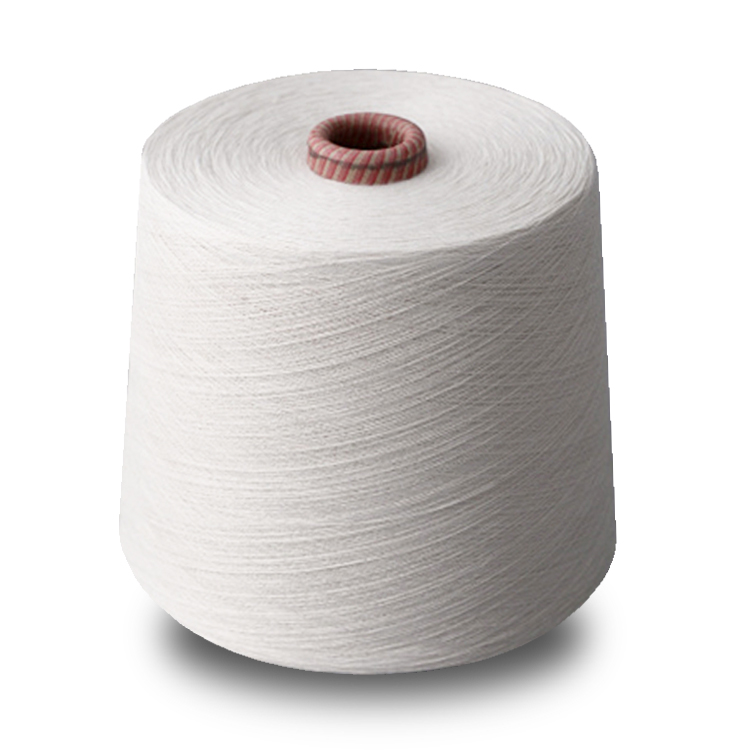
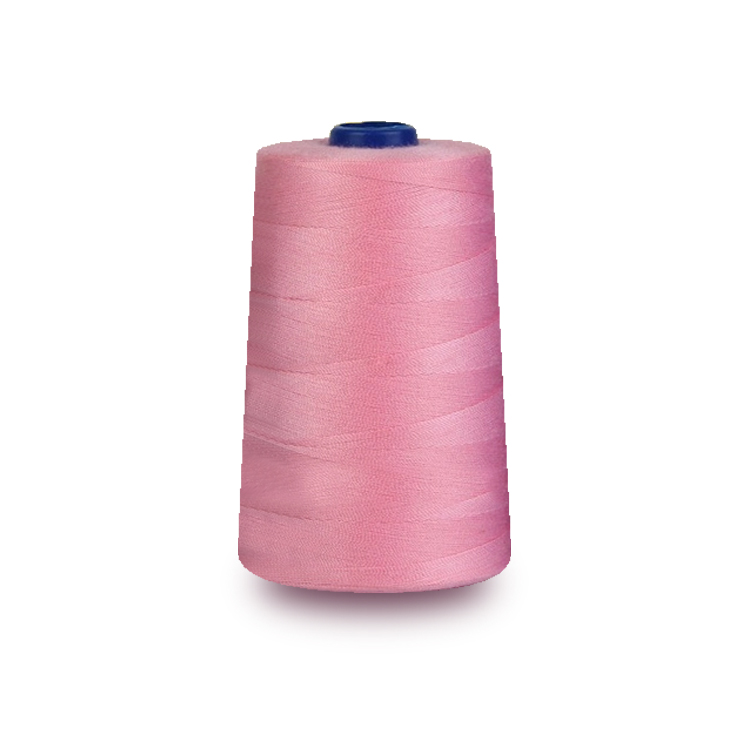
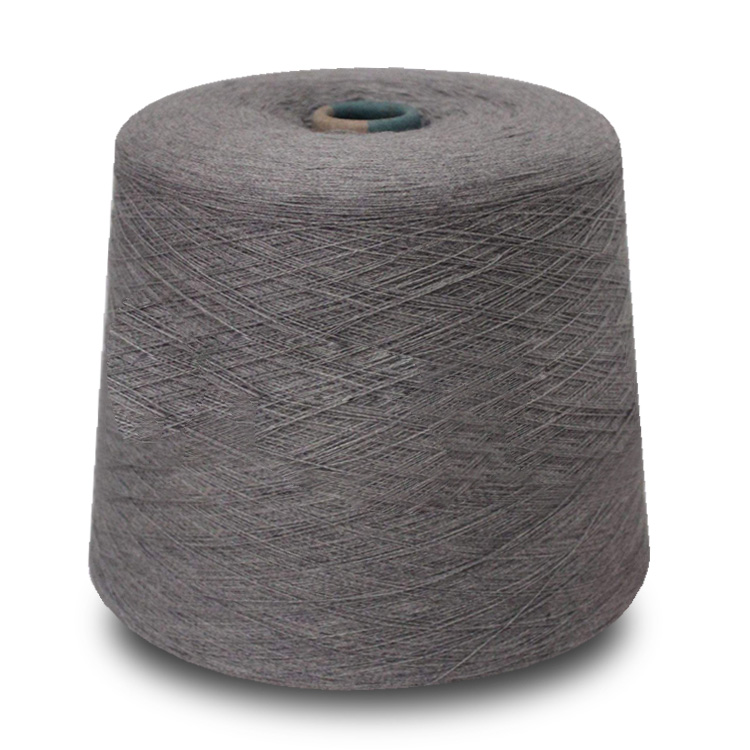
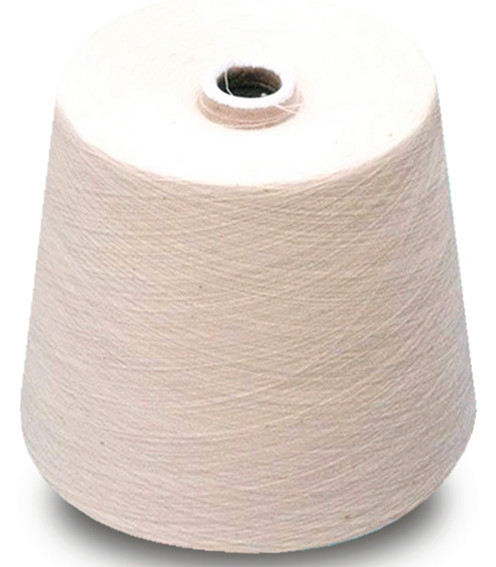
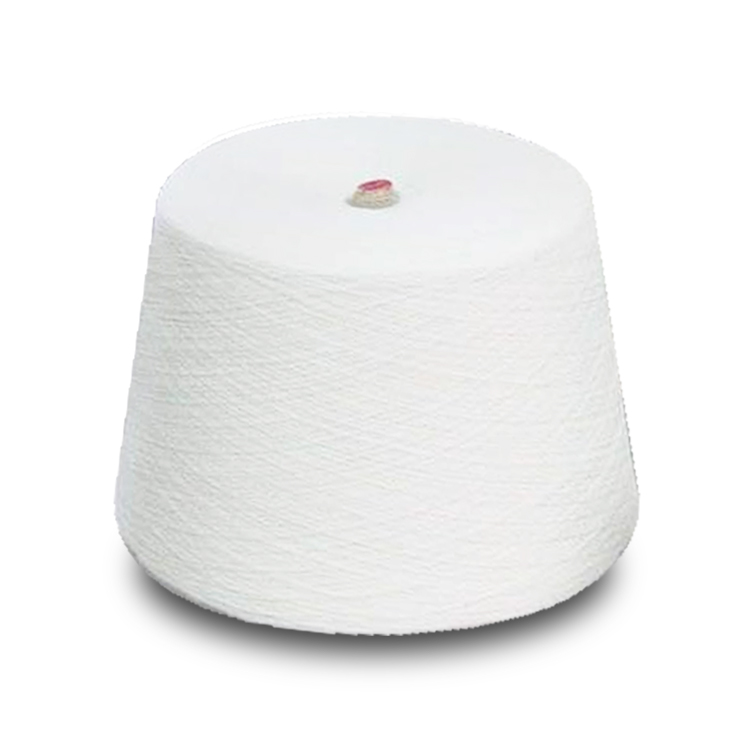
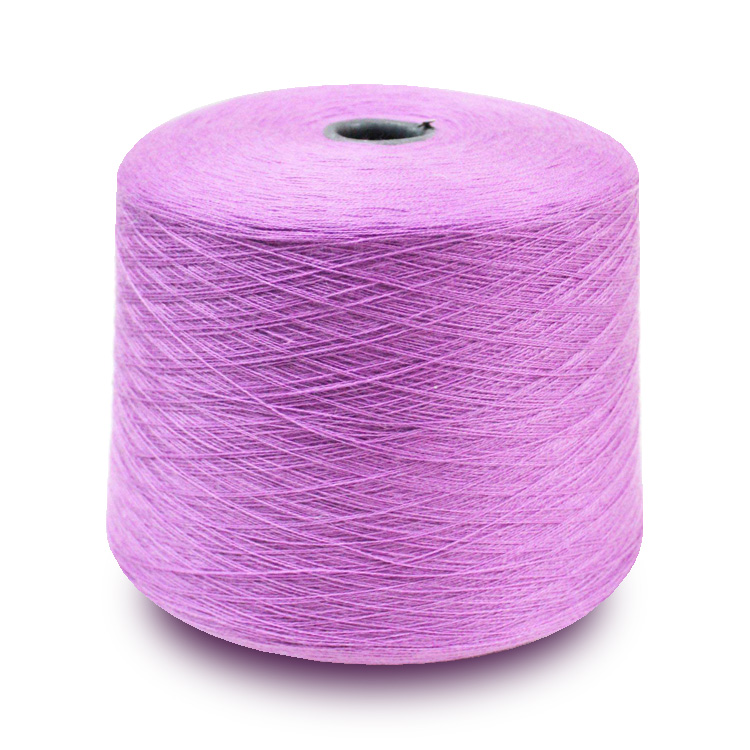
100%cotton Material and cotton Ring Spun Yarn 40s2 Raw White
LQ-0412
Price: From $0.66
Delivery time: 9-20 days after payment
MOQ: 500 KG
100%cotton Material and cotton Ring Spun Yarn 40s2 Raw White
The influence of yarn defects on the subsequent process and the improvement measures
For combed fine cotton yarn, the main harmful defects affecting the cloth surface are coarse knots, details, uneven slivers, flying flowers, neps and abnormal defects. What are the effects of these defects on the subsequent process?
1 thick section, details
Coarse section, the cloth surface performance is a prominent coarse section, affects the fabric appearance, even causes the cloth surface degradation. The fabric factory can improve the appearance by manual selection, but the operation is difficult and time-consuming; the details, because they are thinner than the normal yarn, will form a weak ring of yarn strength, resulting in the breakage of preparation and weaving process, affecting the efficiency of preparation and weaving. Even if the breakage does not occur on the fabric surface, which is fine than the normal yarn, and cannot be repaired, a large number of times will cause fabric degradation.
2 unevenly dried

It will affect the appearance of the fabric and cause the degradation of the fabric surface. When it is especially serious, the fabric surface will show strip shadow or wood grain. When it is light, the fabric surface will be muddy, not smooth, like cloud spots, and the uneven strip will also cause uneven dyeing.
3 Neps
The cloth surface is represented by cotton dots or white stars, which are distributed on the cloth surface and affect the appearance of the fabric. Fabric factory can reduce cotton point by manual picking and repairing, but picking and repairing can not achieve good results when the quantity is too much, and it takes time and labor. When such defects are more or larger, the yarn breakage rate will increase in preparation and weaving, which will affect the preparation weaving efficiency, the appearance and evenness of the fabric, and result in fabric degradation.
4 flying flowers
Cloth surface performance is between coarse section and big nep, shorter than coarse section, loose fiber, affecting cloth surface finish. It can be improved by manual repair.
5. Abnormal defects
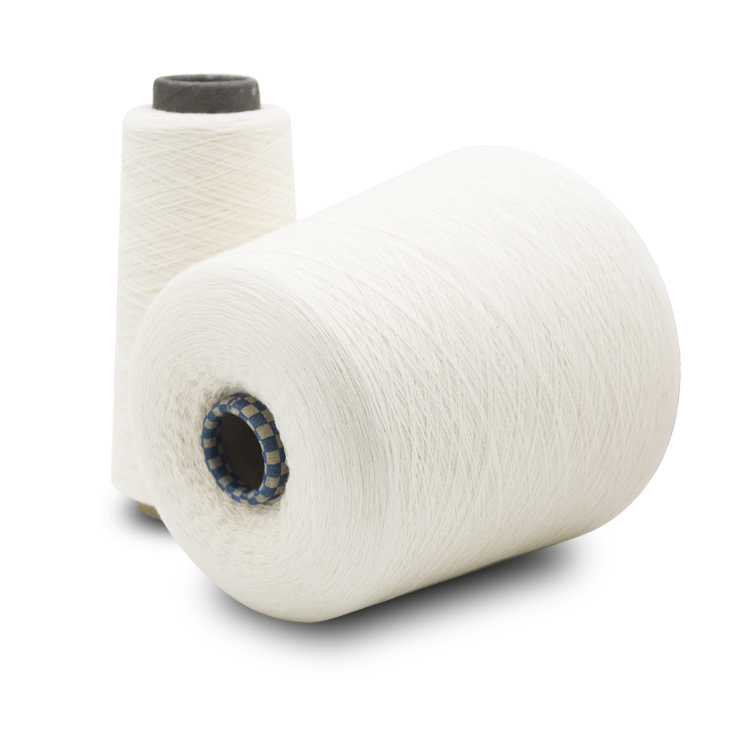
Most of them are long segments with low frequency, such as double thread in single yarn, three and four strands in strand, and long slugs and long details. Such defects seriously affect the appearance of fabric, resulting in fabric degradation. Generally, garment factories need to avoid cutting, which will reduce the utilization of fabric. Even more serious will delay the delivery of orders, compensation for customer losses.
It can be seen that yarn defects have a great influence on the fabric surface effect of the subsequent process, especially the fabric. From the perspective of the product types of cloth factories, different kinds of cloth have different requirements for yarn quality: pure color cloth (plain fabric with the same or different colors of warp and weft yarn): according to the size of the contrast between the warp and weft colors, the different requirements for the neps of the yarn, the greater the contrast between the warp and weft colors, the higher the requirements for the neps, especially the ones after special finishing. Mitten strip (fabrics with different colors of adjacent yarns in warp, weft or warp and weft directions): the greater the contrast of yarn colors, the higher the requirements for the evenness of knots, neps and strips. White cloth varieties (both warp and weft are white or extra white): the requirements for coarse knots and neps are relatively low. Striped cloth type: wide striped cloth has higher requirements on yarn neps than narrow striped cloth (with the same color contrast). Fillets (single or several yarns with large color contrast embedded in plain fabrics): generally, fillets have high requirements for yarn slugs, neps and evenness.
Cause analysis and improvement measures of main yarn defects
Based on the analysis of the influence of the main defects of yarn on the fabric and the requirements of different kinds of cloth on the yarn quality, an effective quality data sharing and exchange mechanism can be established between the yarn factory and the cloth factory, so that the cloth factory can use different kinds of cloth according to the specific quality of each batch of yarn. At the same time, according to the requirements of different kinds of cloth, the cloth factory can also put forward the grade requirements for yarn, so that the yarn factory can reasonably control the quality cost according to the quality of raw materials and the state of spare parts. Of course, in order to meet the requirements of customers and control the quality cost, the mills must find out the causes of these defects in the spinning production process, and take effective measures to control and reduce the defects, so as to improve the quality of yarn.
1 thick section, details
Causes: the common cloth surface has different thickness: 1 cm ~ 2 cm is the most, the middle is coarser and the ends are thinner, most of which are caused by poor drafting, free flying flowers around the drafting area, uneven dry pieces of roving strips, roving defects, improper setting of winding clearing parameters, etc.; a few are caused by poor spinning joints or poor twisting of winder. The details are mainly caused by the poor drafting and twisting of the spinning drum.
Measures: to prevent and solve the slugs and details caused by poor drafting: a) reduce roving twist, i.e. use small roving twist as much as possible without increasing broken ends; b) ensure that the drafting elements of spinning and roving are in good condition, maintain proper cot grinding cycle and apron replacement cycle, and check whether there are grooves, scratches and other problems at any time C) keep constant temperature and humidity to avoid short-time and large-scale fluctuation; d) optimize spinning technology, mainly including the consistency of spacing, upper pin position and cradle pressure. For the coarse knots and details produced in spinning process, only the bobbin cleaner can be used to cut them, which will increase the number of cuts of the cleaner. Special attention should be paid to the splicing quality to avoid the formation of coarse knots and details due to poor splicing.
2 unevenly dried
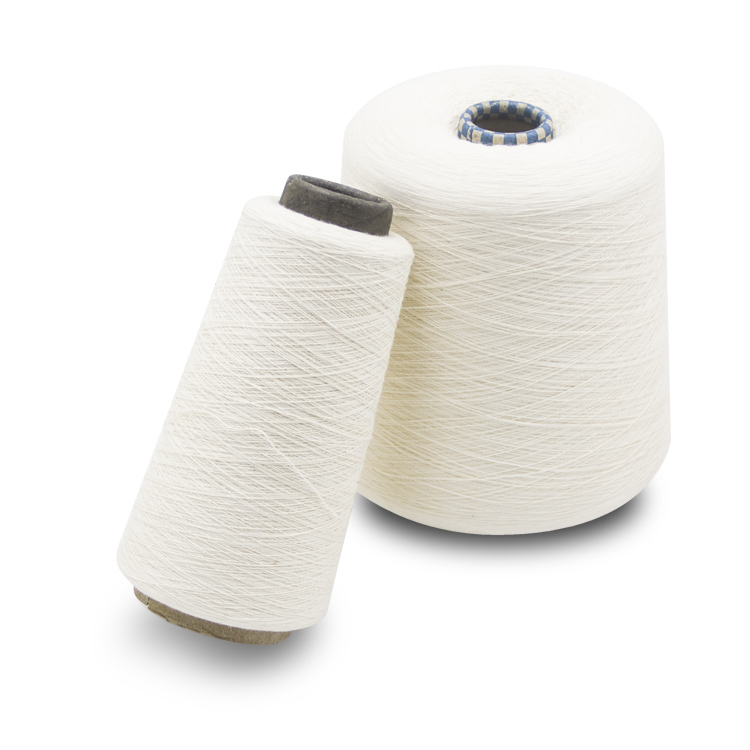
Causes: regular or irregular strip dry shadow on cloth surface; mainly caused by abnormal operation of drafting elements (COTS, aprons, rollers), rough concave convex surface, cots wrapped with flowers, backward spindles and other special spinning parts.
Measures: optimize the drafting area process and maintain a good cot apron state; control the deviation between single and roving number and evenness of sliver, and isolate in time in case of any abnormality; repair the damaged and abnormal spindles of spinning yarn in time, and require the stopping workers to report and inform the relevant personnel in time in case of any abnormality such as cots, aprons and rollers. In order to remove the defect and pick out the defective tube yarn, the parameters of count variation, bead chain yarn defect cutting and alarm are set on the winder.
3 flying flowers
Causes: in the spinning production, due to the untimely cleaning, the failure of the cotton collecting device, the sharp increase of the broken ends, the abnormal temperature and humidity of the air conditioner or the poor air flow, the flying flowers on the machine, on the ground and in the air increase and gather, and they are attached to the yarn body to form flying defects when spinning. In addition, improper cleaning operation of each process will also cause cleaning flowers to be attached to the yarn body.
Measures: the cleaning cycle must be specified according to the cleaning condition of the workshop, and strict inspection shall be arranged. Maintain and check all kinds of cotton collecting devices as well as normal spinning equipment regularly to avoid unexpected faults. Check the spinning speed, control the service cycle of rings and rings, and avoid the phenomenon of sharp increase of broken ends. Air conditioning personnel should strengthen patrol and control to keep the temperature and humidity stable and ensure the smooth air flow in the workshop. For the flying defects that have been formed before the winding process, the yarn cleaner can be used to cut them, but the cleaning process parameters need to be adjusted, and the relationship between cutting times and quality needs to be balanced. To standardize the specific operation of cleaning the yarn channel for the car stopper, so as to prevent the cleaning flowers from being attached to the yarn body during the cleaning process.
4 Neps
Cause of formation: normal fiber, immature fiber, cottonseed shell due to poor processing in ginning or spinning process, the round, flat, large or small fine particles or with fiber seed chips are regarded as neps. It is mainly caused by unreasonable raw cotton blending, poor card clothing or the card clothing has reached the regrinding cycle, poor comber status, poor finish of spinning channel in each process, mismatching of spinning process technology and speed, improper operation of blocking workers, abnormal temperature and humidity, etc.
Measures: use cotton with low impurity, good rolling and low immature fiber content, use needle cloth with good carding condition and low speed, use dense tooth cylinder and top carding for combing, use pressure bar spacing block for spinning, and strengthen cleaning in each process. These are effective methods to reduce neps at present. From the perspective of quality control, pay attention to the NEP test results from raw cotton to yarn formation, reasonably configure each process technology, regularly wipe the main spinning channels, so that the quality of raw cotton to semi-finished products and finished products are under control.
5. Abnormal defects (three strands of yarn, four strands, long details, long and thick knots, etc.)
Cause of formation: long segment double thread yarn, three strand yarn and four strand yarn are common, most of which are caused by yarn floating into adjacent spindles after yarn breaking in winding, doubling and twisting processes, or only one yarn passes through the yarn cleaner due to the wrong insertion of double yarn in winding process; long coarse section and long detail are mainly caused by obvious irregularity of yarn evenness in front spinning and roving, or a small number of wrong branches are not found in winding process Caused by ineffective handling.
Measures: for the parallel and double twisting processes, reasonably arrange the tour route to deal with the broken ends in time, reduce the chance of random floating, and take off the full yarn that has fallen in time; for the phenomenon of winding double tube yarn, it is necessary to start with the operation training and inspection of the blocking workers. The occurrence frequency of abnormal defects is very low, which is generally caused by operation errors and failure to deal with them in time. Once they are formed on the cloth surface, the damage is relatively large. Therefore, it is necessary to strengthen the operation and inspection of the process after yarn forming, and consider the measures before slight reward, punishment and punishment, which can be found and handled in the workshop of the mill, so as to avoid serious losses caused by the final weaving on the cloth surface. Long slugs and long details need to be prevented by strengthening the quality control of the front spinning, and reasonable setting of yarn cleaning parameters by using the yarn cleaner to cut. Improve the skills of the yarn inspector, so that the yarn inspector can find abnormal defects in the finished product inspection.
In a word, it is very important to control the quality of yarn in the process of yarn production. We should find out effective measures to control and improve all kinds of defects by scientific methods, and eliminate the defects in the production process.