

|
Share to:
Related Products
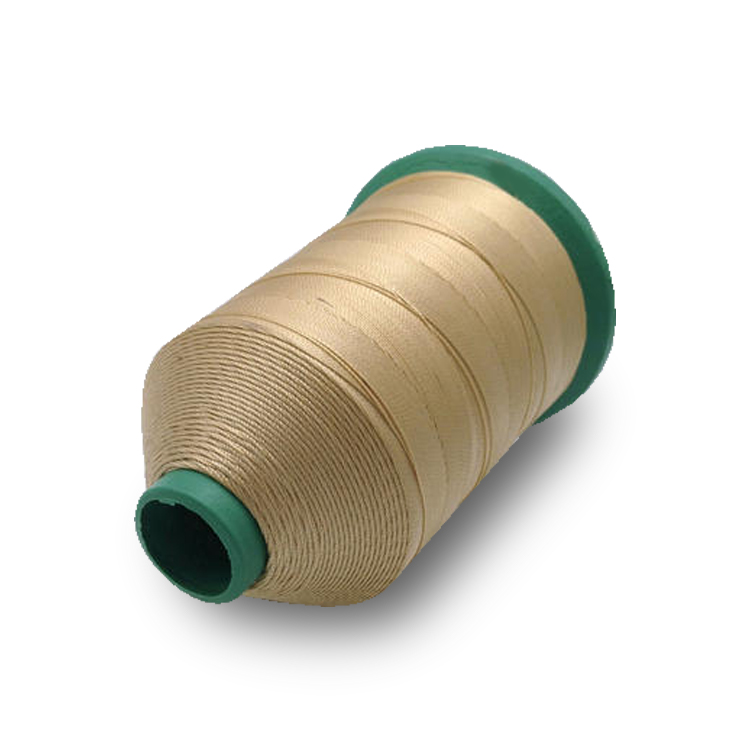


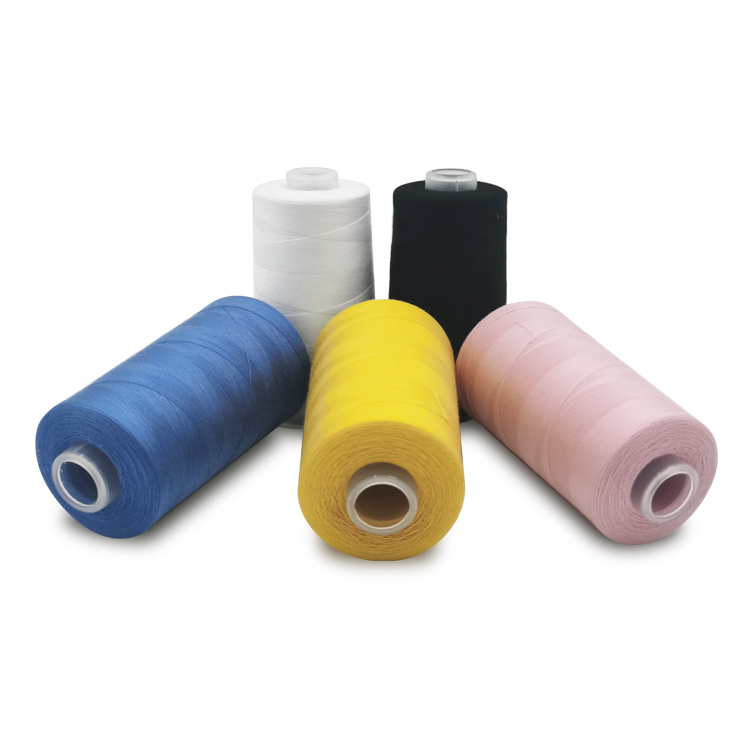
100% polyester spun yarn hign tenacity
LQ-0412
Price: From $0.66
Delivery time: 9-20 days after payment
MOQ: 500KG
100% polyester spun yarn hign tenacity
Twist of yarn
Twist of yarn refers to the number of twists per unit length. Twist has twist direction, and there are "s" twist and "Z" twist. Twist generally refers to the number of twists / m. The number of wool yarns is different, and the twist is also different. In order to facilitate the comparison of twist of wool yarns and wool yarns with different numbers, the concept of "twist coefficient" is often used. The choice of "twist coefficient" is generally that pure wool is greater than blended yarn, blended yarn is greater than chemical fiber yarn, the high content of short wool is greater than the low content of short wool, and the fine count is greater than the coarse count.
Yarn twist test
1 General

Short fiber needs twisting in order to spin into yarn, and filament needs twisting in order to facilitate processing or improve compactness. Twist has a direct impact on yarn structure, physical properties, fabric style and clothing wearing performance. It is the main basis for evaluating product grade. The testing methods of yarn twist are direct counting and untwisting. The untwisting and twisting methods are divided into: untwisting and twisting method a, untwisting and twisting method B, and three untwisting and twisting methods. The direct counting method is suitable for short fiber single yarn, twisted multifilament, strand and cable; the untwisting and twisting method is suitable for single yarn of cotton, wool, silk, hemp and their blends.
2 purpose and requirements

By testing the twist of yarn, we can understand the basic structure and working principle of the twist tester, master the operation method and sampling requirements of the tester, and understand the meaning of each index.
3 applicable standards
3.1 applicable standards: GB / T 2543.1, ISO 2061 textile yarn twist determination part 1: direct counting method, GB / T 2543.2, ISO / DIS 17202 textile yarn twist determination part 2: untwisting and twisting method, and GB / T 14345 synthetic fiber filament twist test method.
3.2 relevant standards: FZ / T 10001 method for the determination of twist of air flow yarn, etc. and the product standards it covers, GB 6529 standard atmosphere for humidity control and test of textiles, ASTM D 1422, D 1423, as 2001.1.2.14, BS 2085, JIS l 1095, can / cgsb-4.2n0.8, bisfa and other standards abroad.
4 instruments and appliances
⑿ 1 Y331LN yarn twister (as shown in Figure 1).
4.2 analysis needle.
5 principle
5.1 the direct counting method refers to the method of measuring the number of twists when holding the two ends of a certain length of sample, rotating one end of the sample and removing the twist of the sample under the specified tension until the component units of the sample are parallel. The number of twists removed is the number of twists of the yarn sample of that length.
5.2 untwisting and twisting is an indirect method to determine twist. Untwisting and twisting method a is to clamp the two ends of the tested yarn with a holder under a certain tension. After untwisting and reverse twisting, 50% of the number of twists required for the sample to return to the initial length is the number of twists of the yarn under that length. Untwisting and twisting method B is to test the first sample according to method a and the second sample according to 1 / 4 of the number of twists measured by the first sample Twist and then twist to the initial length to avoid measurement errors due to pre tension and accidental drafting. The triple untwisting and twisting method is generally suitable for air spinning products.
See Figure 2 for the block diagram of detection principle
6 sampling
Samples shall be taken according to relevant provisions of product standards or agreements, and those not specified in product standards or agreements shall be taken according to table 1.