
|
Share to:
Related Products
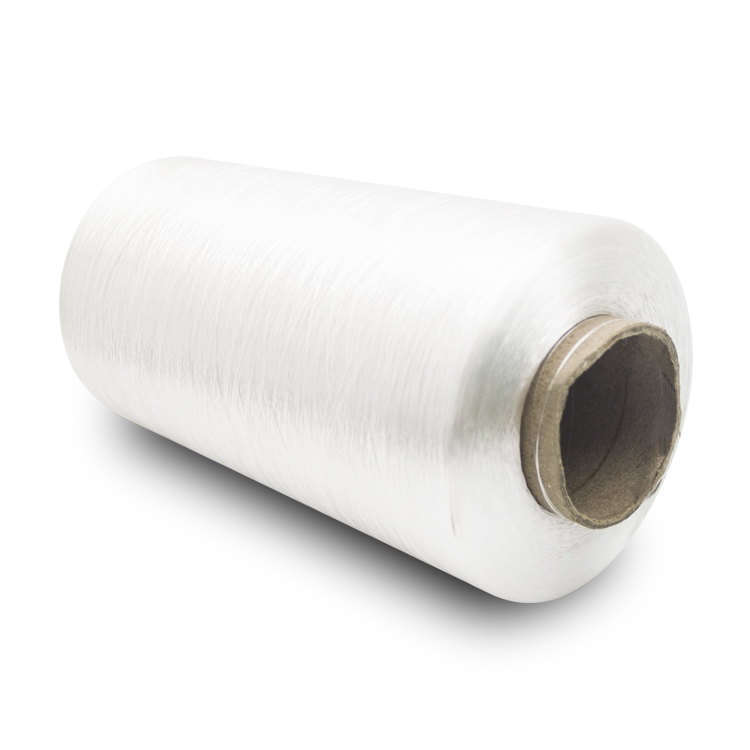
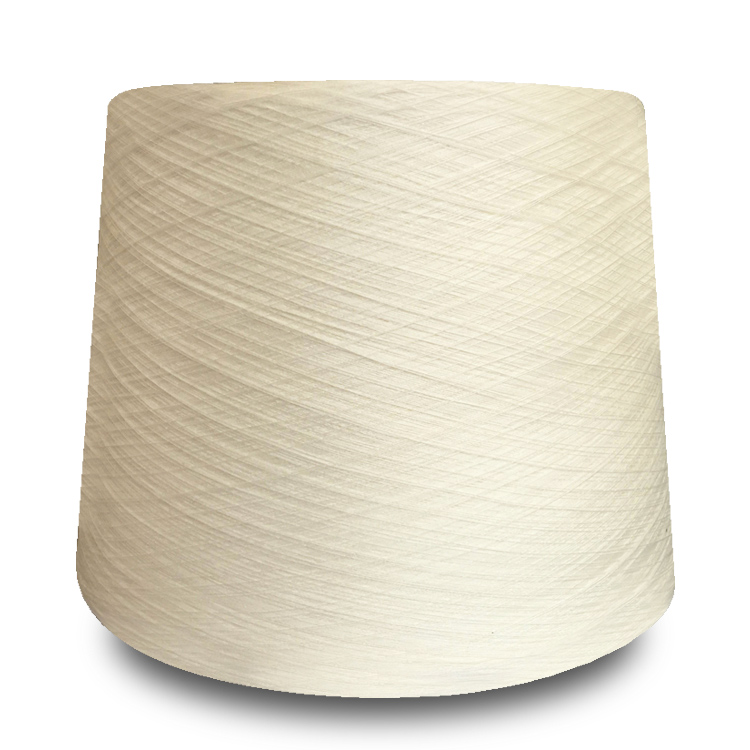



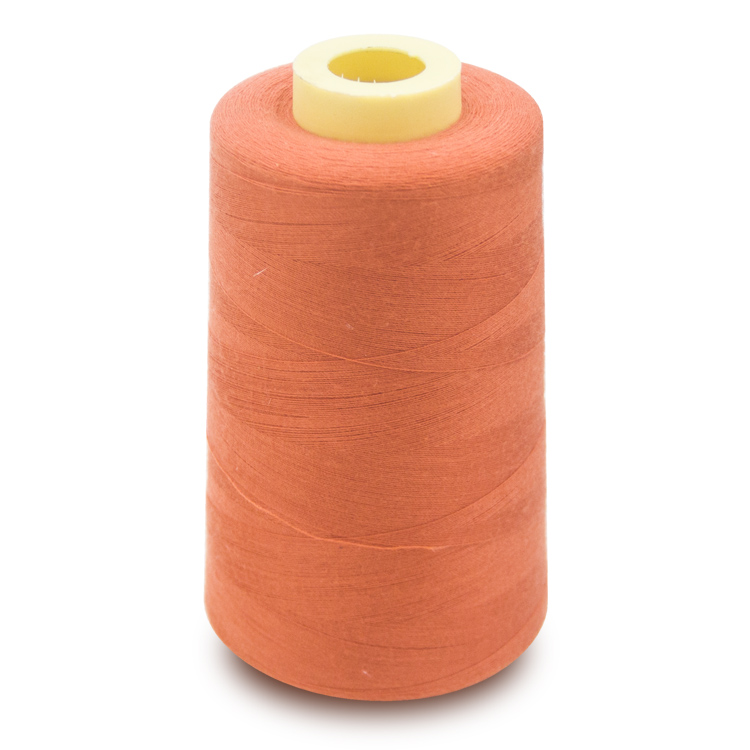
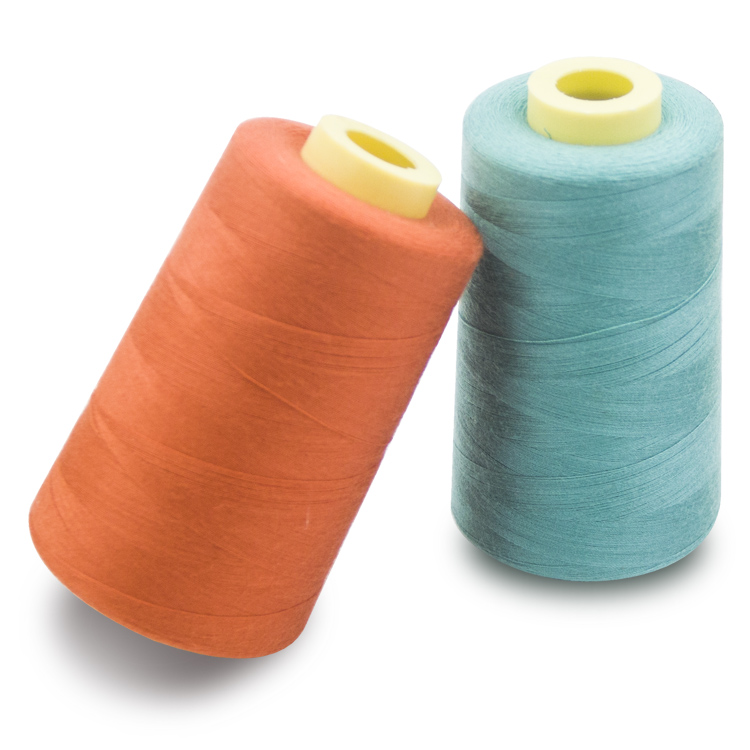
50/2 high tenacity polyester yarn for sewing
LQ-0412
Price: From $0.66
Delivery time: 9-20 days after payment
MOQ: 500KG
50/2 high tenacity polyester yarn for sewing
Yarn strength
An index of the tensile strength of the yarn. There are absolute strength and relative strength. The absolute strength is the breaking strength, which is the external force that the yarn can bear when it is stretched to fracture. There are single yarn strength, ply yarn strength and strand yarn strength. The unit is Newton, dyne, gram force, kilogram force or pound force. The relative strength is as follows: ① breaking strength refers to the external force on unit cross-sectional area of yarn from stretching to breaking, with units of N / mm 2, dyne / mm 2 and kgf / mm 2; ② specific strength refers to the external force that the unit fineness yarn can bear from stretching to breaking, and the units are n / tex, KL / tex and KL / Dan; ③ breaking length, Is the length, in kilometers, of yarn weight equal to its breaking strength. In the metric series of yarn fineness, it is equal to the product of single yarn or ply strength (gram force) and its metric count divided by 1000; in tex series, it is equal to the ratio of single yarn or ply yarn strength (gram force) to tex, that is, specific strength; ④ quality index is the index of relative strength of yarn. When the yarn fineness is in British system, it is equal to the product of yarn strength (pound force) and the number of single yarn inch system; when yarn fineness is in tex system, it is equal to 1000 times of the quotient of yarn strength (KGF) and Tex of single yarn. When the strength of yarns with different fineness is compared, the relative strength is applied. Typical values of several yarn strengths are shown in the table below: yarn strength is a reflection of the inherent quality of the yarn and is a necessary condition for the processing performance and end use of the yarn. The quality index is the main basis for China to determine the pure or blended yarn of cotton yarn or cotton type chemical fiber. Therefore, yarn strength is one of the most important routine inspection items in textile production.

The single yarn strength is always less than the sum of the breaking strength of each fiber in the cross-section, and the ratio of the two is called the fiber strength utilization coefficient in the yarn, which is usually 0.40-0.50 for cotton yarn and 0.20-0.30 for wool yarn; the yarn strength is always less than the sum of the single yarn strengths in the yarn, and the ratio is called the strand ratio, which is 0.7-0.78 for cotton yarn and 0.4-0.82 for wool yarn The strength of ply yarn is generally higher than the sum of single yarn strength, and its ratio is 0.95-1.35 for double ply cotton yarn. The ratio of yarn strength converted from fabric strength to yarn strength before weaving is called yarn strength utilization factor in fabric, and its value is greater than 1. The warp direction and weft direction of cotton poplin fabric are about 1.155 and 1.115 respectively.
The strength of single yarn or ply yarn is measured on pendulum type yarn strength testing machine, inclined plane yarn strength testing machine or electronic strength testing machine, and the sample length is specified to be 500 mm. The new yarn strength tester can automatically carry out the strength test, print out the average value of strength and elongation and their coefficient of variation. The yarn strength was measured on a pendulum type yarn strength tester. The lap length of cotton yarn or cotton type chemical fiber pure or blended yarn was 1 meter (or 1.5 yards), and every 100 cycles (or 80 cycles) was 100 meters (or 120 yards), the loop length of wool yarn was 1 meter, 20 cycles of combed wool yarn (20 meters) and 50 cycles (50 meters) of combed wool yarn were one strand.
The main factors affecting yarn strength are: 1) fiber properties: the higher the fiber strength, the finer the fineness, and the longer the length, the higher the yarn strength. The natural winding of cotton fiber and the crimping of wool and chemical fiber will increase the cohesion between fibers when the yarn twist is not large, thus improving the yarn strength. Short fiber content has great influence on yarn strength. In cotton yarn, the short fiber ratio under 16 mm increases by 1%, and the strength of cotton yarn decreases by 1-2%. ② Yarn structure: the strength of yarn can be improved when the fiber is transferred inside and outside the radius direction, and the yarn strength can be improved when the structure is uniform; the yarn strength decreases when the fibers are arranged in layers and folded, buckled and hooked more; the yarn strength increases with the increase of twist degree below the critical twist degree, and decreases with the increase of twist degree after the critical twist degree is exceeded. The strength of yarns spun by different spinning methods is obviously different due to their different structures. The strength of coarse roving yarn is about 5-10% lower than that of the same ring yarn, but the yarn fineness is uniform and the weakest pitch is not lower than that of ring yarn. The strength of electrospun yarn is similar to that of rotor yarn. The strength of the same phase self twist yarn is very low because of the non twist area on the yarn; the strength of the out of phase self twist yarn is increased due to the staggering of the non twist area on the yarn. The strength of the twisted yarn is further improved due to the reasonable distribution of the twist. ③ Blending ratio: in two-component blended yarn, when the blending ratio of one component increases gradually from zero, the strength of blended yarn generally decreases gradually. After reaching the minimum value, if the proportion of this component continues to increase, the spinning strength will gradually increase. The larger the difference of elongation at break between the two kinds of blended fibers, the more obvious the trough phenomenon of strength. ④ High temperature and humidity: with the increase of temperature, the yarn strength decreases; with the increase of relative humidity, the moisture regain of yarn increases, the strength of cotton and hemp yarn increases, and the strength of wool and man-made fiber yarn decreases. Therefore, the strength test should be carried out under the specified standard state (temperature 20 ℃, relative temperature 65%), otherwise the measured strength should be corrected for temperature and moisture regain.
Strength is one of the tensile properties of yarn, including breaking elongation, initial modulus, yield stress, yield elongation, breaking work, etc.
The higher the number of polyester yarn, the higher the strength requirement. The factory strictly controls each link.