
|
Share to:
Related Products
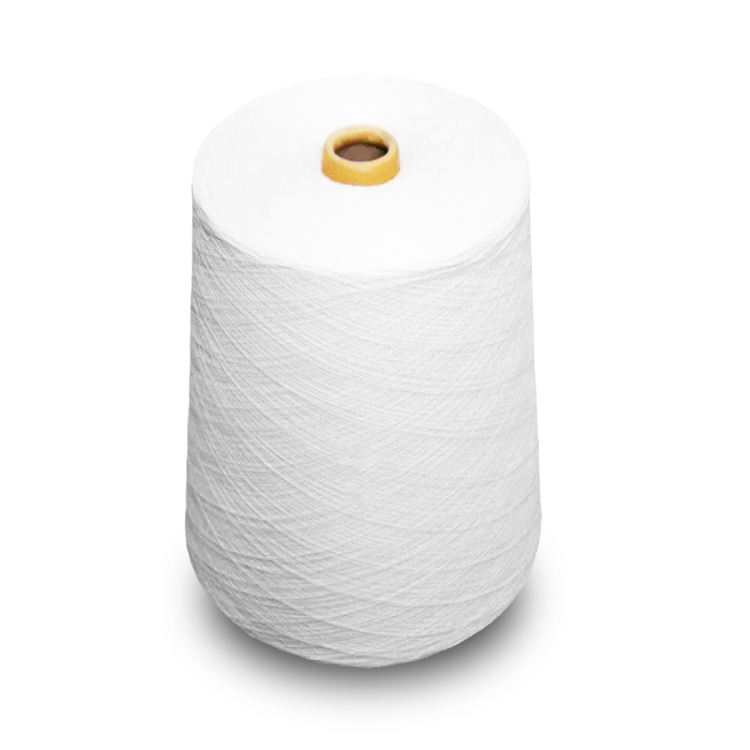


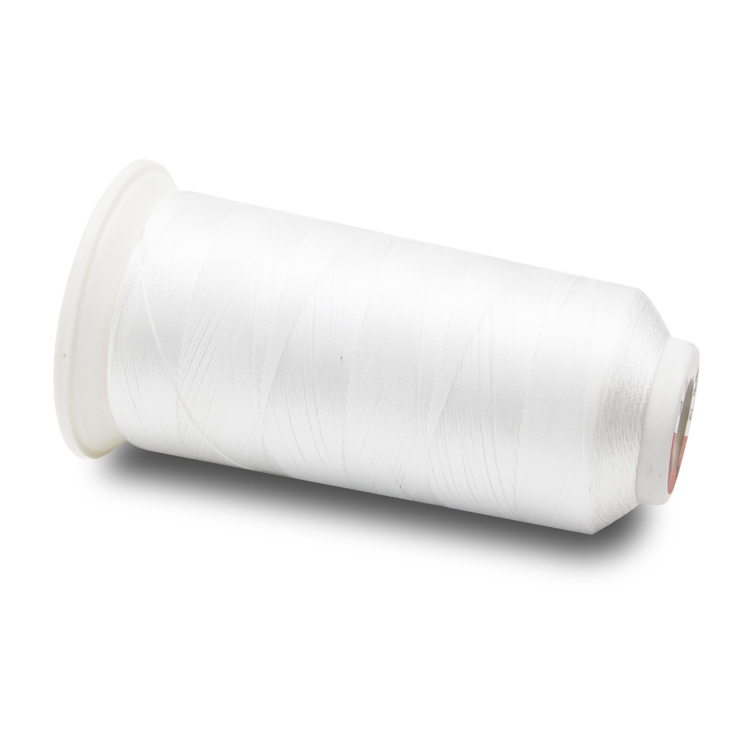
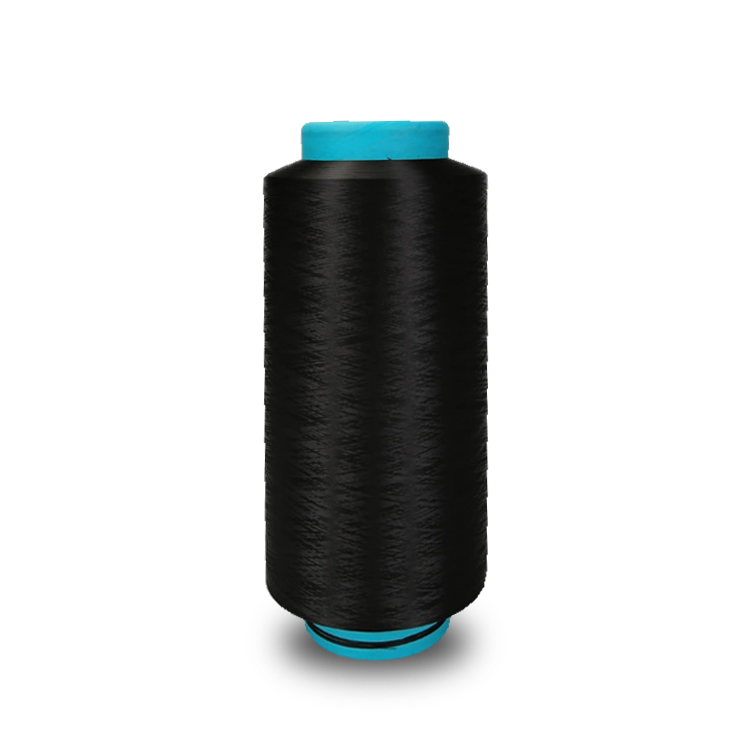
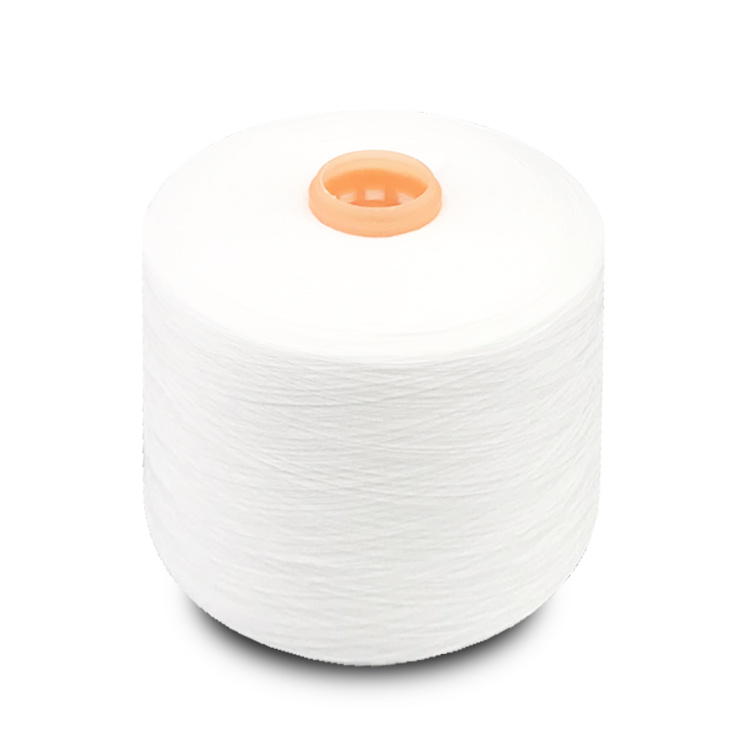
20s/4 Manufacture Supply Spun Polyester Yarn Wholesale
LQ-0412
Price: From $0.66
Delivery time: 9-20 days after payment
MOQ: 500 KG
20s/4 Manufacture Supply Spun Polyester Yarn Wholesale
The twist of the yarn itself will naturally and tightly hold the fibers together, so it is very favorable for weaving or knitting. Among them, the twist of yarn is related to the diameter of yarn, and the measurement method is determined by the number of turns in each inch of yarn, and is expressed as low, medium or high. Generally, the higher the twist is, the more the number of turns of yarn, the better the yarn strength. Low twist yarns are often used to make smooth, glossy or soft matted fabrics; conversely, fabrics with wrinkle or rough surface require high twist yarns. The appearance of spinning wheel has great influence on spinning technology. It is generally believed that spinning wheel originated in China and evolved from silk reeling machine. The origin of the European spinning wheel is not clear, they appeared later, and the earliest recorded spinning wheel was about the 14th century. In the 15th century, in Saxon (now part of East Germany), an improved spinning wheel appeared. The burning rod was mounted on the machine, and the wheels were operated by pedals. This kind of machine could spin and wind at the same time. The spinner could free his hands and reduce the labor force.
The evolution of Chinese spinning wheel
The most primitive textile tool in China should be spinning brick. It is a flat round spinning wheel made of stone or pottery. There is a short rod in the middle. By using the inertia of object rotation, it is engaged in winding and twisting yarn. From the unearthed textiles, it can be inferred that there were spinning wheels in the spring and Autumn period. In the Qin and Han Dynasties, hand-operated single spindle spinning wheel was widely used.
In Song Dynasty, the improvement of spinning wheel made a breakthrough. The emergence of large hemp spinning wheel and large water transport spinning wheel actually had the rudiment of small factory. The most important achievement in textile technology is the weaving method and jacquard technology of gauze, brocade and other fabrics. The cotton weaving industry is also gradually developing.
Due to the rapid development of cotton fabrics in Southern Song Dynasty, the rapid development of cotton fabrics can only be solved by the rapid development of cotton fabrics in Southern Song Dynasty. According to the records in the record of "diegenglu" written by Tao Zongyi of Yuan Dynasty, although cotton was planted in Songjiang at the end of Song Dynasty, because there was no bicycle or bow, only string and bamboo arc could be used for elastic spinning, and the efficiency was extremely low.
During the Yuan Zhen period of the Yuan Dynasty, when Huang Daopo returned to her hometown, she felt the hard work of women engaged in textile, so she improved the old textile machinery to become a set of production tools for pole, spring, spinning and weaving. In addition, she created a three spindle pedal spinning wheel, which can spin three yarns at the same time. The three spinning wheel was a great invention at that time. Before the advent of the machine spinning wheel, it was very difficult to find a person who could spin two yarns at the same time. The three spinning wheel not only improved the work efficiency, but also increased the output. Moreover, it was 500 years earlier than the "Jennie machine" in Europe.
The emergence of multi spindle spinning wheel in Qing Dynasty pushed the development of hand-made textile machinery to a peak. For manual spinning industry, multi spindle spinning wheel is the most complete and fastest spinning wheel to improve efficiency.
Spinning mechanization
It was not until the industrial revolution, the rapid growth of the market and the increasing demand for production speed that new spinning technologies emerged. In the 40 years from 1738 to 1779, spinning was transformed from manual production to large-scale industrial manufacturing.
In 1737, L. Paul invented the roller spinning method, which became the pioneer of many later inventions.
In 1764, J. Hargreaves invented the spinning jenny machine, which could operate 16 spindles simultaneously and operate multiple yarns in a set order. Subsequently, spinning frames using other power sources appeared one after another.
In 1769, with the help of a watchmaker, R. arfwright improved the old spinning wheel and invented the water spinning machine. The earliest hydro spinning machines were powered by horsepower, and later water power was introduced. This hydraulic machine is of great significance in the history of the textile industry. In the past, when manual machines were used, textile workers could operate the machines at home, but once the power was used, the workers could not leave the power source, so it was regarded as the beginning of the factory system. The first factories in history were set up to make textiles.
In 1779, S. Crompton developed a spinning mule combining the advantages of the jeney spinning frame and the water spinning machine, which could spin fine and strong yarns. At the same time, the invention of cotton rolling machine and E Whitney's steam powered machine was used to separate cotton from cottonseed to spinning yarn. The workers who had been engaged in this time-consuming work (separating cotton and cottonseed) could use the extra labor to engage in other field production, which accelerated the pace of textile industrialization. Because it can come by machine. The United States has become an important country of raw cotton export because of the use of spinning machine and gin.
We still have a long history of polyester textile in China.